
Showing posts with label devolved powers. Show all posts

Saturday, 3 May 2014

The bedroom tax won't be scrapped in Scotland unless we stop excluding severely disabled tenants from Discretionary Housing Payments

As many media outlets report today, the Scottish Parliament is to be given new devolved powers to remove the cap on Discretionary Housing Payments (DHPs), with many commentators suggesting this will mean "the bedroom tax will be scrapped in Scotland". Sadly, that is not the case.

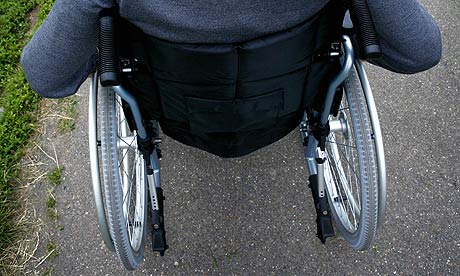
The reality is many local authorities across Scotland 'means test' DHPs, which perversely results in severely disabled tenants being excluded from DHPs because their disability benefits are taken into account when their disposable income is assessed. Why should disabled tenants have to pay the bedroom tax from their disability benefits? Govan Law Centre (GLC) believes this is wrong, both as a matter of legal principle and in terms of fairness.

For example, this week in GLC's two successful bedroom tax First Tier Tribunal appeals, both tenants had been refused DHPs by their local authority because they were in receipt of Disability Living Allowance.

Why should Scottish local authorities stop taking disability benefits into account when assessing eligibility for DHPs?

We can do no better than quote Lord Justice Maurice Kay from the leading English Court of Appeal case of Burnip and others v. The Secretary of State for Works and Pensions [2012] EWCA Civ 629 (at para 45):

"First, I think it is necessary to draw a clear distinction between the benefits which Mr Burnip was entitled to claim for his subsistence, and those which he was entitled to claim in respect of his housing needs. His incapacity benefit and disability living allowance were intended to meet (or help to meet) his ordinary living expenses as a severely disabled person. They were not intended to help with his housing needs ... It would therefore be wrong in principle, in my judgment, to regard Mr Burnip's subsistence benefits as being notionally available to him to go towards meeting the shortfall between his housing- related benefits and the rent he had to pay".

Disabled people need disability benefits to meet their extra living costs by reason of their disability. Taking disability benefits into account as disposable income is wrong as a matter of not just legal principle but also as a matter of basic fairness and equity. 

GLC is calling upon the Scottish Government to work with the UK Government to make sure it has the power not only to set the cap for DHPs, but if it wants to scrap the bedroom tax it has to ensure it has the power to require all local authorities in Scotland to stop excluding severely disabled tenants from DHPs because they receive disability benefits.
Share/Save/Bookmark

Wednesday, 30 January 2013

GLC calls for Scottish Government to deploy its powers to mitigate the scourge of payday lending in Scotland

GLC has prepared a Scottish Parliamentary briefing for all MSPs in advance of this afternoon's debate on payday lending in Scotland ('Cost of Living' debate). Our briefing is available here as a PDF.  We believe that the UK payday loan market is predatory, usury, dysfunctional and immoral. 

In our briefing we address the powers that the new Financial Conduct Authority will have, which we think will be central to tackling the undisputed serious consumer detriment caused by payday lending in the UK.  However, the Scottish Government and Scottish Parliament have a number of powerful levers at their disposal which we believe are equally central to tackling the scourge of payday lending in Scotland. 

GLC has made the following recommendations to improve consumer protection against payday lending in Scotland: 

> Investment in Scottish credit unions to enable them to offer equivalent products to ‘payday loans’ on a fair and affordable rate of interest.  HM Treasury is currently consulting on raising the 2% per month interest cap on credit unions, and we support an increase to enable credit unions to offer a fairer alternative to payday loans in Scotland.[1]

> Improving our debt relief remedies so that Scots entrapped in a cycle of dysfunctional payday loan interest and charges can be untangled swiftly and fairly – Govan Law Centre has proposed a Fast Track or enhanced Debt Arrangement Scheme for this purpose.[2]  This could be done quickly by Scottish statutory instrument under existing legislative powers.

> Education is a key part of the solution, and we believe the Scottish Government should deploy resources to mount an educational campaign to help Scots avoid the pitfalls of payday loans. Such a campaign could be tied in to awareness raising of alternative forms of short-term credit (e.g. through credit union products) and the availability of enhanced forms of debt relief.

 > We would conclude by noting that if no action is taken on these issues in Scotland, then the consumer detriment caused by payday loans will escalate from April 2013 with the introduction of the bedroom tax.  Scottish tenants faced with eviction from the effect of UK Government under-occupancy charges to housing benefit will turn to payday loans, which will exacerbate their problems.  Govan Law Centre has advocated a ‘no eviction for bedroom tax arrears’ policy, with bedroom tax arrears being treated as an ordinary debt. This could be achieved by a minor amendment to the Housing (Scotland) Act 2001.[3]


Share/Save/Bookmark